
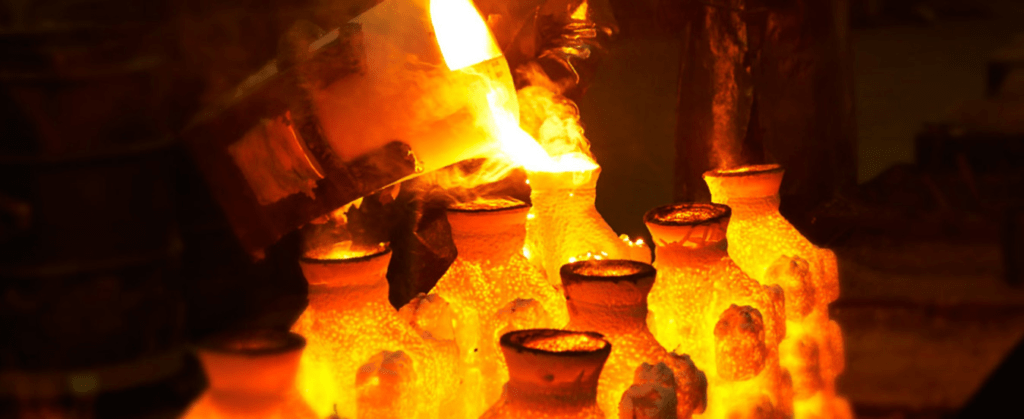
There has been a shift in the worldwide manufacturing industry from mass production to specialized precision engineering. As part of this change, cast metal manufacturers are not just component providers but rather engineering partners for companies needing components with complicated geometries, smaller tolerances, lighter weights, and material properties.
From aerospace engine casings to electric car battery housings, niche casting manufacturers are leading the way with specialized processes, metallurgical knowledge, and digital manufacturing technologies.
Why Niche Manufacturing is Important in Metal Casting
Volume production was the hallmark of traditional foundry manufacturing. The modern manufacturer, however, needs:
Exact dimensions
Minimal defect rates
Heat-resistant metals
Lightweight parts
Specialized metallurgical properties
Quick prototyping abilities
These needs have given rise to the emergence of specialized niche casting manufacturers.
Examples include:
| Niche | Specialized Casting Requirement |
| Aerospace | Superalloy investment casting |
| EV Manufacturing | Lightweight aluminum die casting |
| Medical Equipment | Biocompatible stainless precision casting |
| Oil & Gas | Corrosion-resistant sand casting |
| Defense | High-strength ferrous alloy casting |
| Marine | Saltwater-resistant bronze casting |
Specialized Metal Casting Methods
Investment Casting for Aerospace Parts
Investment casting, also known as lost wax casting, is favored for precision applications where even micrometer differences can affect the product.
Uses include:
- Turbine blades
- Exhaust pipes
- Aerospace parts
- Medical devices
Reasons why aerospace companies use investment casting
- Smooth surface finish
- Minimal need for machining
- Cast complicated designs
- Accurate dimensions
A growing number of aerospace foundries are now incorporating vacuum casting and simulation technology into their manufacturing process.
High-Pressure Die Casting for Electric Vehicles
There has been an immense rise in the need for aluminum and magnesium die cast products within the electric vehicle industry.
Main EV components that are made using die casting include:
- Housing for motors
- Casing for batteries
- Aluminum frames
- Thermal systems
- New trend: gigacasting
Modern automotive companies are moving towards the use of gigacasting, where multiple parts welded together are replaced by one huge aluminum casting.
Advantages of gigacasting include:
Reduction in assembly time
Lighter vehicle weight
Higher stiffness
Decreased manufacturing costs
This trend is driving metal casting firms towards smart foundries that involve more automation.
Sand Casting of Large Heavy Engineering Components
Although new techniques have evolved in terms of precision, sand casting is crucial for large components in industries.
Industries dependent on sand casting:
- Mining
- Agriculture
- Heavy construction equipment
- Electric power plants
Advantages of sand casting in heavy engineering
- Cost-effective in producing large parts
- Flexible mold-making process
- Ideal for iron alloys
- Low cost of tools
The latest sand casting facilities employ AI mold simulation to minimize shrinkage.
Material Expertise – the True Competitive Edge
Casting’s future will not just be process-based but also metallurgy-based. Top manufacturers set themselves apart by virtue of their knowledge about:
Aluminum Alloys
Perfect for:
- Electric vehicles
- Aviation applications
- Consumer electronic devices
Strengths:
- Low weight
- Corrosion resistance
- High thermal conductivity
Stainless Steel Castings
- Applications include:
- Food processing
- Chemical facilities
- Medical instruments
Primary advantage:
- Outstanding corrosion resistance
Nickel-Based Superalloys
Critical for:
- Jet engines
- Gas turbines
- High-temperature environments
These alloys retain strength even under extreme heat and pressure.
Smart Foundries: Industry 4.0 for Metal Casting
Small-scale manufacturers of metal casting parts are adopting digital technology in their manufacturing processes.
Advanced technologies in the field of foundry
3D Sand Printing
Facilitates mold formation without requiring tools.
Digital Twin Simulation
Helps predict metal flow using computer modeling prior to casting.
AI-based Defect Analysis
Automated inspection systems can spot errors instantly.
Internet-of-Things Enabled Furnace Control
Achieves greater energy efficiency and temperature management.
The outcome will be:
Less scrap generated
Shorter manufacturing cycle
Process consistency
Cost savings
Sustainability in Contemporary Metal Casting
Compliance with environmental regulations has turned into a competitive edge.
Manufacturers with vision are making investments in:
- Recycling sand system
- Induction heating
- Recycled metal use
- Eco-friendly melting technology
- Emission-controlled production
Many companies consider foundry ESG performance while purchasing along with its production capacity.
How to Choose the Right Metal Casting Manufacturer
Selecting the right manufacturing partner requires evaluating more than production capacity.
Key factors buyers should assess
Technical Capability
Can the manufacturer handle:
- Complex geometries?
- Tight tolerances?
- Specialized alloys?
Industry Certifications
Look for:
- ISO 9001
- IATF 16949
- AS9100
- NADCAP
Simulation & Engineering Support
Advanced foundries provide:
- CAD optimization
- Mold flow analysis
- Prototyping assistance
Quality Control Infrastructure
Important capabilities include:
- X-ray inspection
- Spectrometry
- CMM testing
- Ultrasonic testing
Future Trends in Metal Castings Production
The coming decade will bring significant change in the industry via:
Lightweight Engineering
Fuelled by the needs of electric vehicles and aircraft efficiencies.
Hybrid Processes
Integrating metal casting with additive manufacturing processes.
Increased Automation
Systems for robotic pouring and finishing are now standard practice.
Localized Supply Chains
Manufacturing plants are turning more frequently to domestic casting suppliers to avoid geopolitical complications.
Conclusion
The world of metal casting manufacturers is slowly but surely transitioning from being mere providers to becoming engineering systems of the future. Specialization, digitization, sustainability, and innovative alloying are changing the nature of engineering manufacturing of today’s industrial world.
Working together with a specialized casting company will soon become not just an advantage for businesses needing high-quality manufacturing, but a requirement.
Those who know about the complexity and sophistication of today’s casting technologies can pick the best manufacturing partner.